Using M.S.M routine
What is the routine needed before you slow down, change direction, or adjust your speed (whether decreasing or increasing)? Why is it necessary? In this lesson, you will learn and understand why MIRROR, SIGNAL, and MANOEUVRE are so important for your safety.
Mirrors, Signal and Manoeuvre.
The question is “do you know the abbreviation of M.S.M”?
Mirror, signal & manoeuvre.
Use of mirrors
How often do you need to check your mirrors?
Every 6/10 seconds
What are the different glasses in your mirrors?
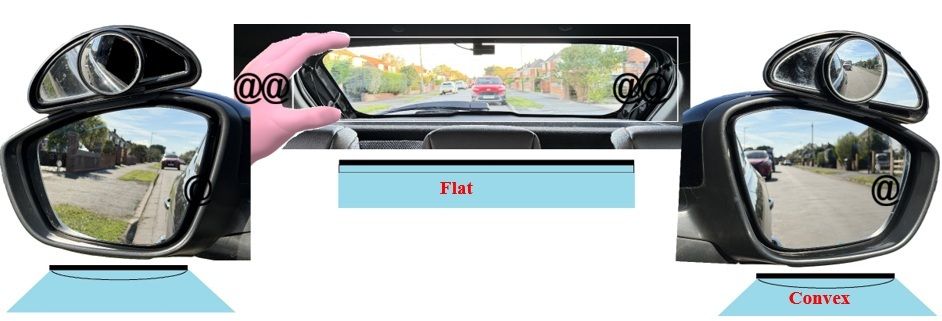
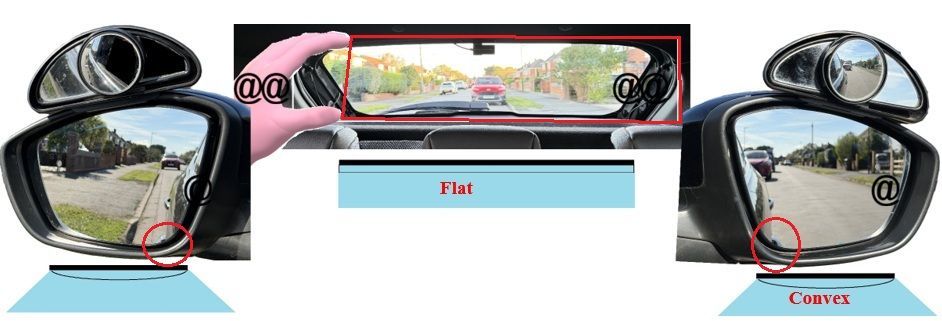
Flat (interior) Convex (door mirror).
Mirrors -Set up and use
Can you remember how to set your mirrors up?
In the moving picture above, adjust the interior mirror to frame the back window, and set the door mirrors so they show 25% of the car and 75% of the road. Alternatively, position your front door handles in the inside bottom corner of the mirror, marked by the red circle.
Blind spots
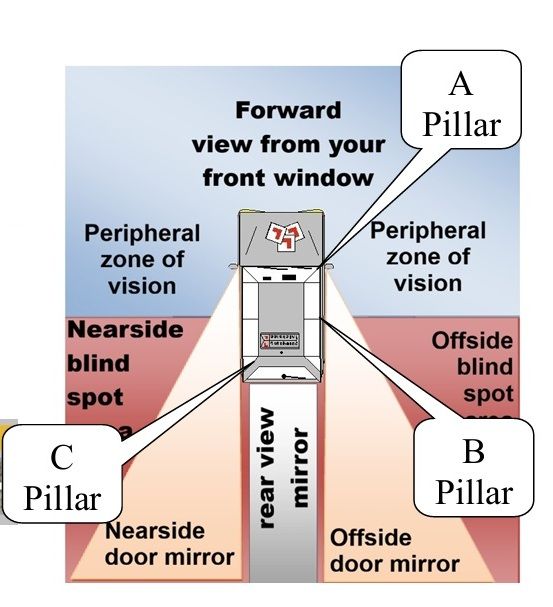
Where are the blind spots in your vehicle?
Blind spots are where you can't see in your door mirrors.
A, B & C pillars
Do you know where the A, B and C pillar are?
It’s the area you cannot physically see through. The pillars from body to the roof of your vehicle.
When do you need to check your mirrors?
Use them before you speed up, slow down & change direction.
Altering speed examples
Speed up could be higher speed road or a slower speed road. Or even slowing down for an oncoming vehicle as they have the right of way, or slowing for a actual or potential danger.
Direction change
Change direction when I'm going to turn left or right at a junction
Signaling
Before I indicate left or right
Signal
Can you think of any signals on a vehicle?
Let me give a prompt with some pictures..
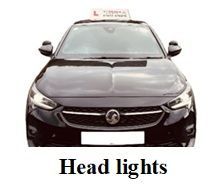
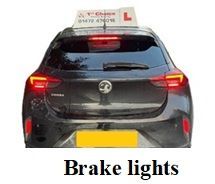
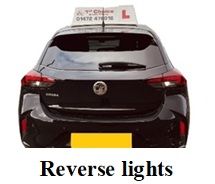
Flashinf your head light, using your brake lights, putting your hazard warning signs and even sounding your horn all all signals to warn you are there
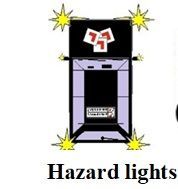
What is the purpose of your signal?
To inform other road user, cyclists & pedestrians your intensions.
When is a signal necessary?
Before speeding up, slowing down & changing your direction.
Hand signals
Do you ever wave a pedestrian on? No never, as you could be waving them into danger.
Arm signals
Do you know how you can you back up an action if you had no brake lights or indicators?
Arm signals on the move

Manoeuvre
Turning left Turning right
Discus why you need to have a good road positioning with your vehicle as it is vital when on a public road then you could be asked a few questions on adequate clearance.
How much clearance is necessary passing a cyclist at 30MPH?
The new rule of 2023 a cyclist can pedal in the middle their side of the road. This makes it harder for drivers to overtake a cyclist. So only overtake when you know you have enough time to overtake the cyclist and return before the side road.

How much clearance is necessary passing a parked vehicle at 30MPH
When travelling at 30MPH+ you need to give 1 metre clearance (door length) from parked vehicles when overtaking parked vehicles. When travelling on a 30MPH+ road you need to slow down to 15MPH (walking pace) and give ½ metre clearance when overtaking parked vehicles.
When travelling on a 30MPH+ road you need to slow down to 5MPH (crawling pace) or under and give 1/4 of a door length (wing mirror distance) when overtaking parked vehicles. Objective
Throughout your driving lessons your goal is to move your training vehicle off, change gear then park up on the left somewhere... S.C.A.L.P as this is a skill needed to be demonstrated on your driving test.
Aim
Practice moving off, stopping, changing gears up/down and put the M.S.M routine in practice more independantly.
End of lesson
At the end of lesson your instructor will give you feedback on your performance. Then you will discuss and agree new goals for next lesson.
Agree support on upcoming lesson.
Agree risk responsibility. Encourage gestalt on student’s new topic.
Making progress and adequate clearance could be your next lesson topic.