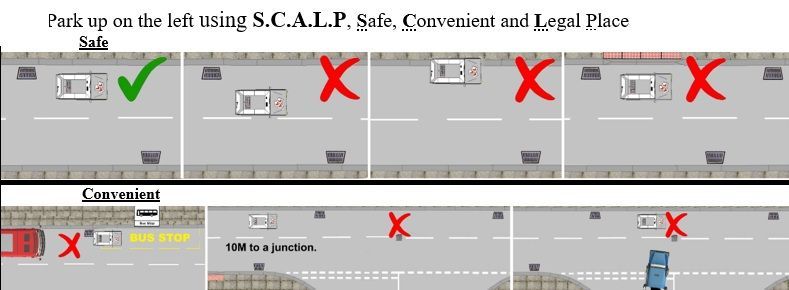
Park up on the left using S.C.A.L.P (Safe, Convenient and Legal Place)
Parking your training vehicle on either the left or right side of the road can be tricky, but it’s a crucial skill to learn. Striking the kerb can be dangerous, with the worst outcome being hitting a pedestrian on the pavement. You could also hit a lamppost, damage your tyre wall, scratch your alloy rims, or throw off your vehicle’s tracking. To avoid these risks, find the reference point that works best for you and practice managing them effectively.
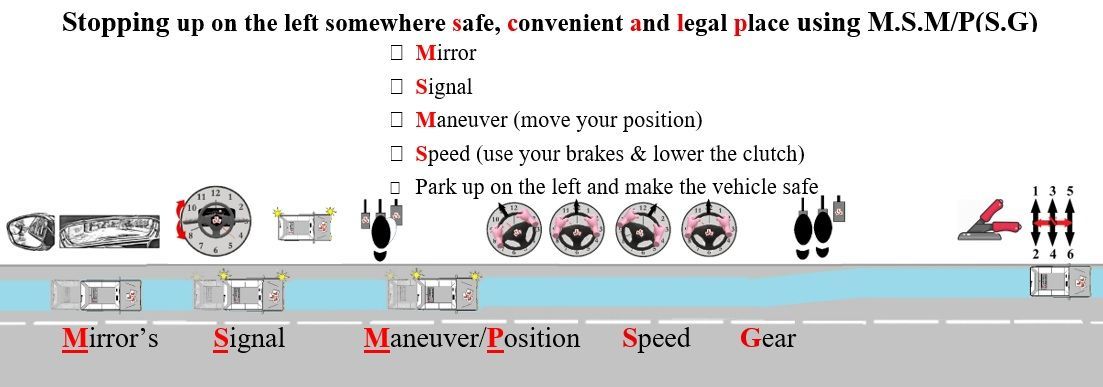
It’s your responsibility to control the speed when moving your training vehicle to the left hand side of the road. Mastering this skill quickly is important so you can pull up confidently and cause less disruption behind you. You’ll need to slow down, and drivers behind you will notice your reduced speed and brake lights when you press the brake pedal. They’ll naturally slow down and wait for you to stop at the side of the road or make turns, after which they can continue on their way.
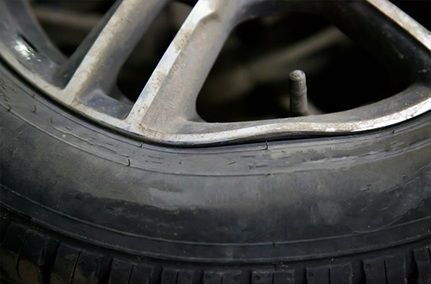
Damage to your training vehicle.
Parking on the left can be risky for public safety, as pedestrians lack the protection of a metal shell like you do, making it your responsibility to assess the risks before choosing a safe spot. It can also cause damage to the training vehicle, with potential harm from hitting or scraping the kerb, you might dent your wheel, rip your tire, knock your tracking out, and over time this can lead to uneven wear on your tires.
Demonstrate parking on your driving test
On your driving test you have to demonstrate your understanding of the rules of the highway code as you will be asked to pull up on the left-hand side of the road a few times. This does not sound difficult but unfortunately student’s do fail their driving test due to where they have parked up on the left. On driving lessons your driving instructor will guide you the proper location to pull your tuition vehicle.
For example, DO NOT STOP: -
- At a bus stop.
- Opposite or within 10 metres (32 feet) of a junction, except in an authorised parking space.
- Near the brow of a hill or hump bridge.
- Opposite a traffic island or (if this would cause an obstruction) another parked vehicle and blocking the road.
- Where the kerb has been lowered to help wheelchair users and powered mobility vehicles.
- In front of an entrance to a property/drive way.
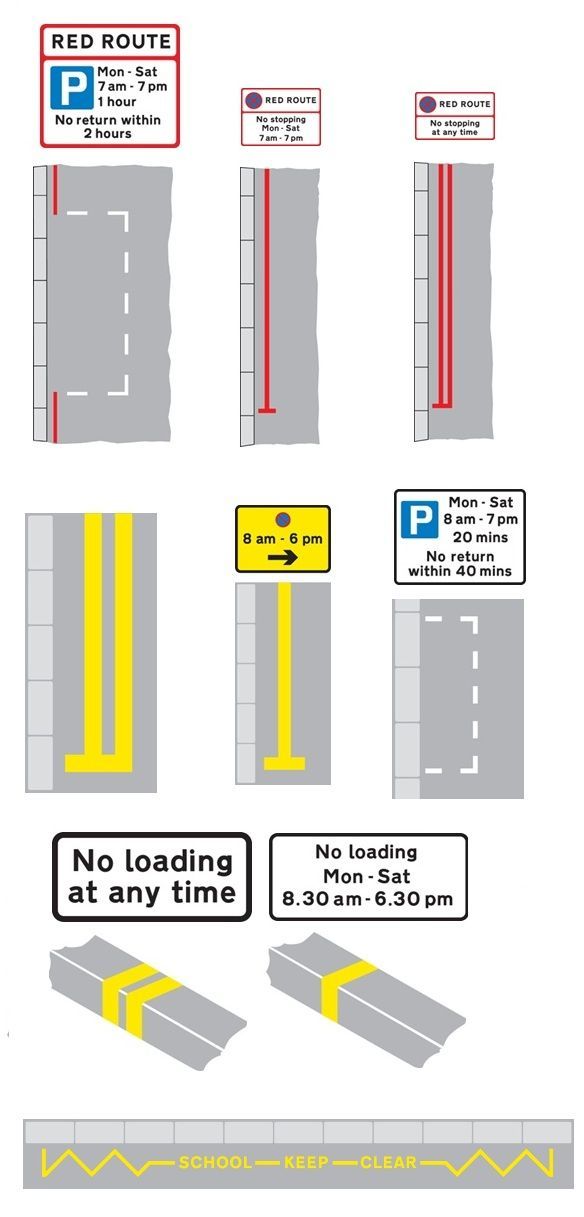
- On yellow zig zag lines outside a school (inside operational times).
- On double and single yellow lines (inside operational times).
- Anywhere you would prevent access for Emergency Services.
- At or near a tram stop.
- On the approach to a level crossing/tramway crossing.
- On a bend.
The list is endless and common sense is a must when parking.
Somewhere SAFE Park up 30cm or 1 drain width from the kerb Unsafe Do not park up too wide, covering a drive or drop kerb or on the pavement.

Convenient
Not on a bus stop, 10m to a junction or adjacent to a junction

Legal Place
Pay attention to road marking and signs so you do no park in a illigal place.
Objective
Throughout your driving lessons your goal is to park thinking about somewhere... S.C.A.L.P as this is a skill needed to be deomstrated on your driving test.
Aim
Practice moving off and stopping
End of lesson
At the end of lesson your instructor will give you feedback on your performance. Then you will discuss and agree new goals for next lesson. Agree support on upcoming lesson. Agree risk responsibility. Encourage gestalt on student’s new topic.
Please note you will cover maybe gear changes on this lesson too. Click the link below to take you to moving off and stopping.