Steering
In today’s lesson, you and your driving instructor agreed to focus on learning the skill of steering.
Understanding and mastering the push/pull method in any vehicle is a key skill that plays an important role in safe driving, especially when negotiating junctions.
Goal (aim)
- Understand the pull-push method of steering
- Confident building finding your biting point (using clutch control)
- Understand points of turns on corners and execute a safe and smooth turn when turning left, right and emerging
For safety this lesson is necessary before you move onto the next stage of basic junction
Remember your last skills on observations and control
Head – To look where you are going
Hands – Hands to guide your training vehicle in the direction you want to go
Feet – Your feet to co-ordinate your accelerator, brake and clutch pedals so you are in full control
Managing your training vehicle
Understanding what is expected from you on each lesson in other words what responsibility are you going to take on each lesson skills?
- Moving off & stopping.
- Changing gear.
- Turning left, right from a main road into a side road.
- The holding back position including leaving adequate clearance (if this brief has not been discussed on your lesson so far it will be your next skill to learn).
The question is what help will you need?
Risk responsibility's
You and your instructor will agree the support needed and which areas on the start of your lesson: -
• Full talk through
• Prompt
• Independent
The above information is so important to ensure that you the student and your instructor understands what part of the (risk) responsibility in the training vehicle you are taking control off and at what help you are in need from your instructor.
Your goal is to drive as independently and client-centered as possible in each lesson, taking on more responsibility every time and staying in full control of any situation you encounter. Gaining knowledge and building your skills is your main focus.
How your lesson will begin
Your driving instructor will park in a space and align the wing mirrors with the front line of the bay. This is your first reference point to help you identify where the front end of your training vehicle is.
Why will your instructor give you this reference point?
Your instructor does this to give you a visual reference for judging how far to drive forward into a parking bay. It also helps you understand how to approach the end of the road safely and gauge the distance when driving into bays.
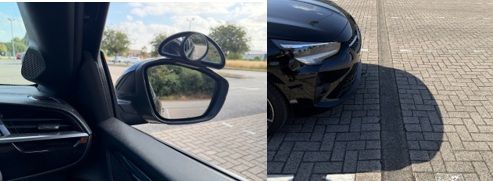
Use reference points in the front window to locate the front two wheels.
You and your instructor will swap seats, then review the cockpit drill.
Next, discuss the view from your front window—where do you see the two white bay lines at the bottom?
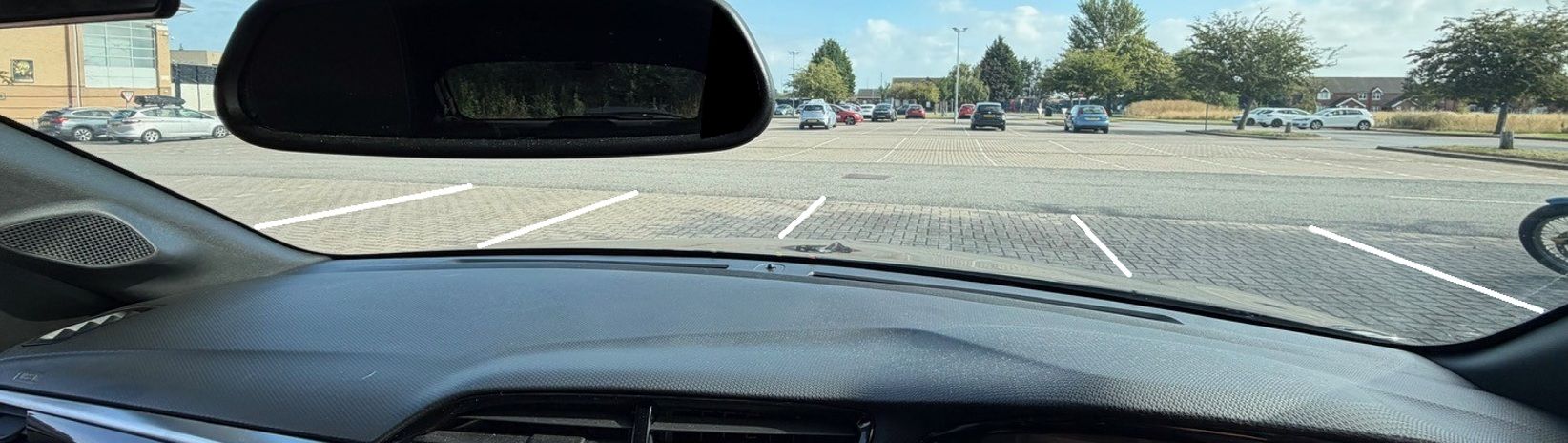
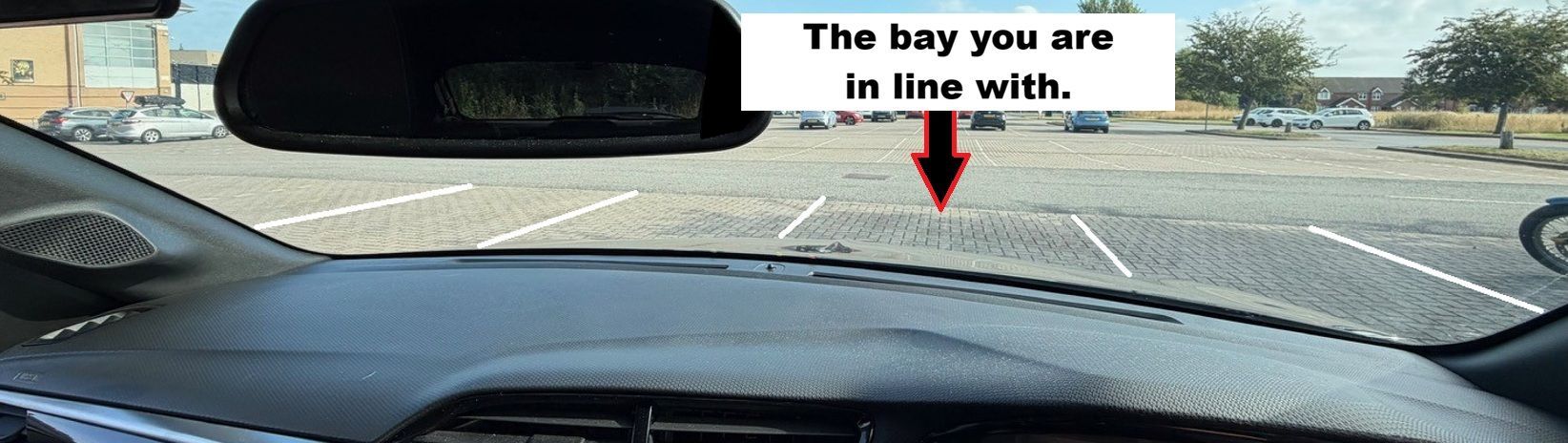
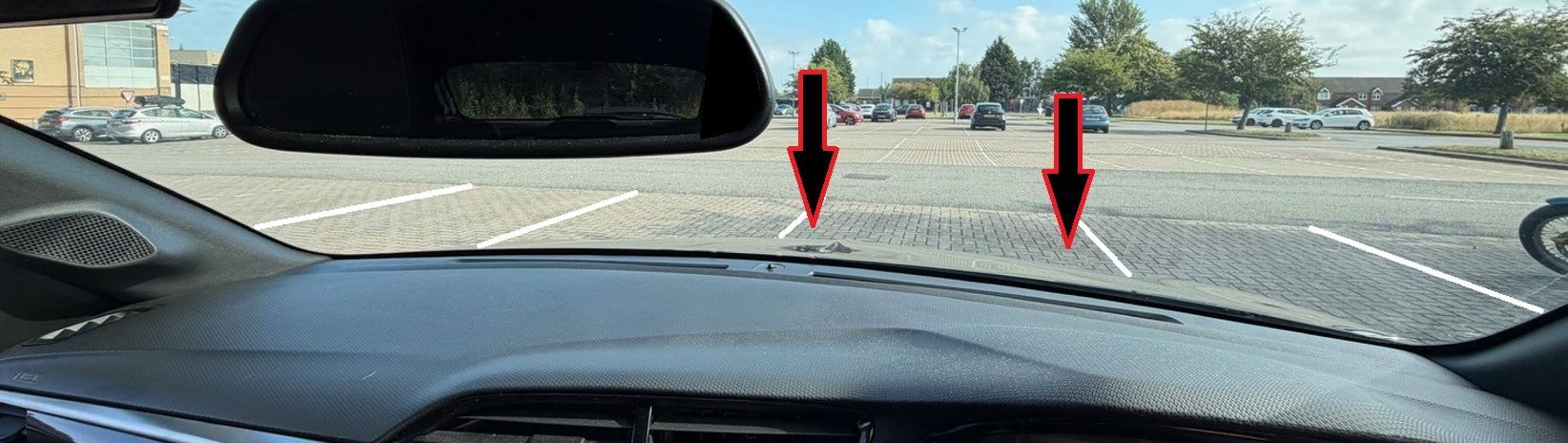
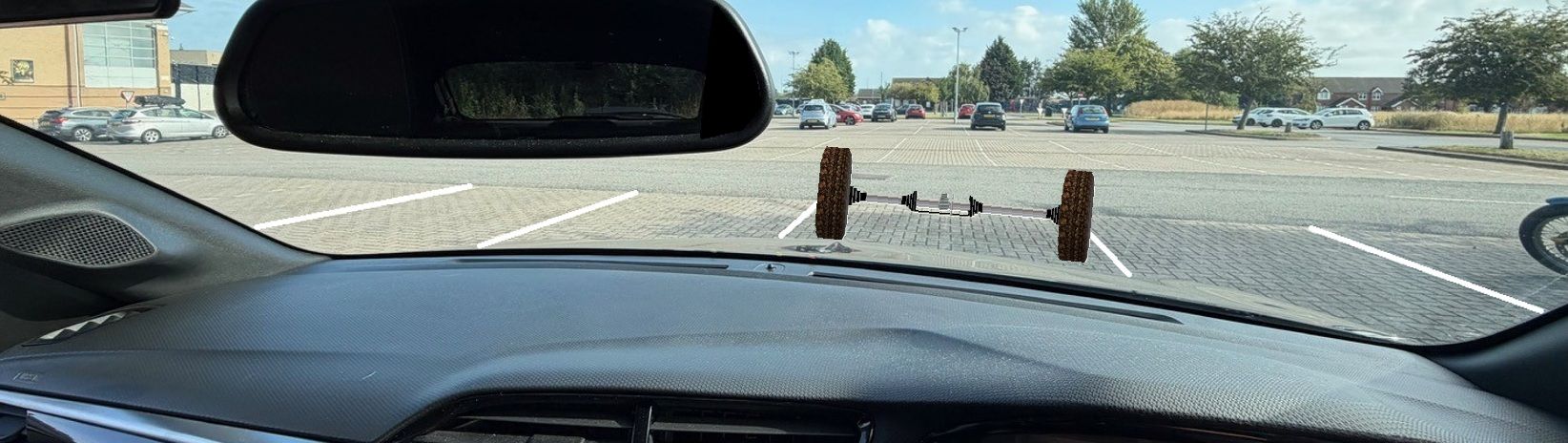
You're now looking at the slideshow and thinking, "I don't understand this at all." What you'll start to realize is that when you're sitting in the driver's seat, the view you see will change.
When parked next to the kerb, it will appear just to the left of the center at the bottom of your front window.
Let me give you another visual point.
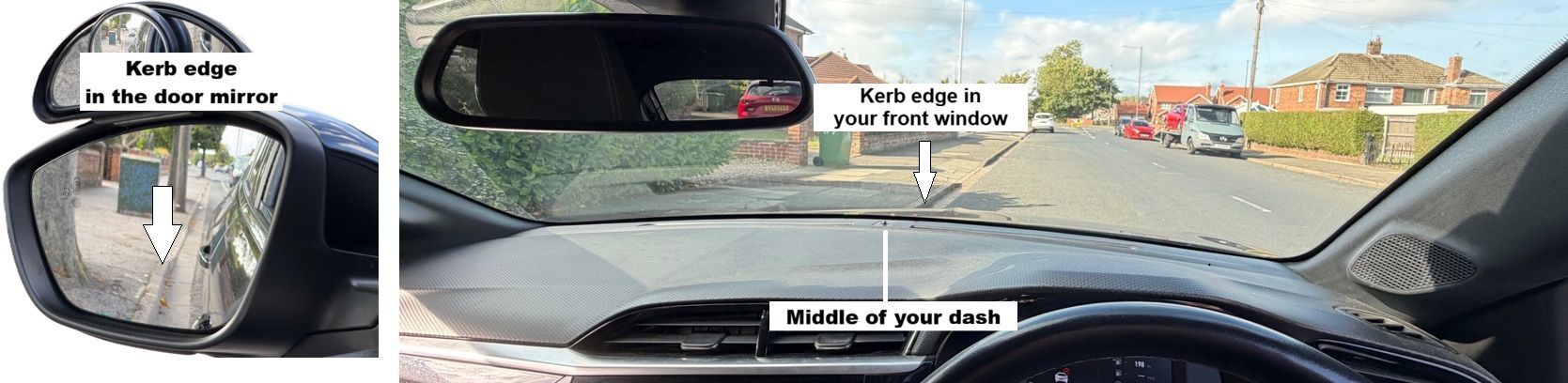
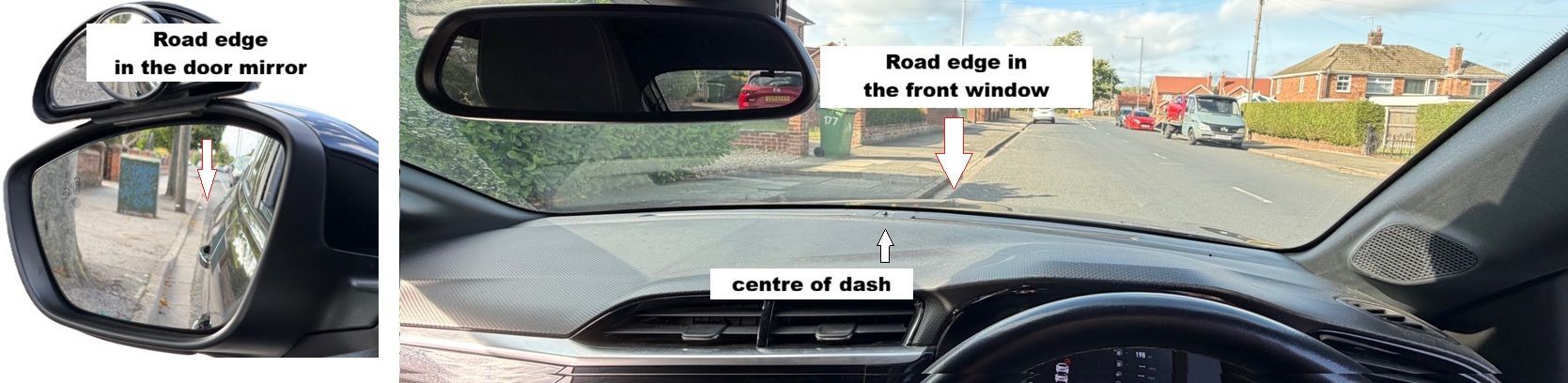
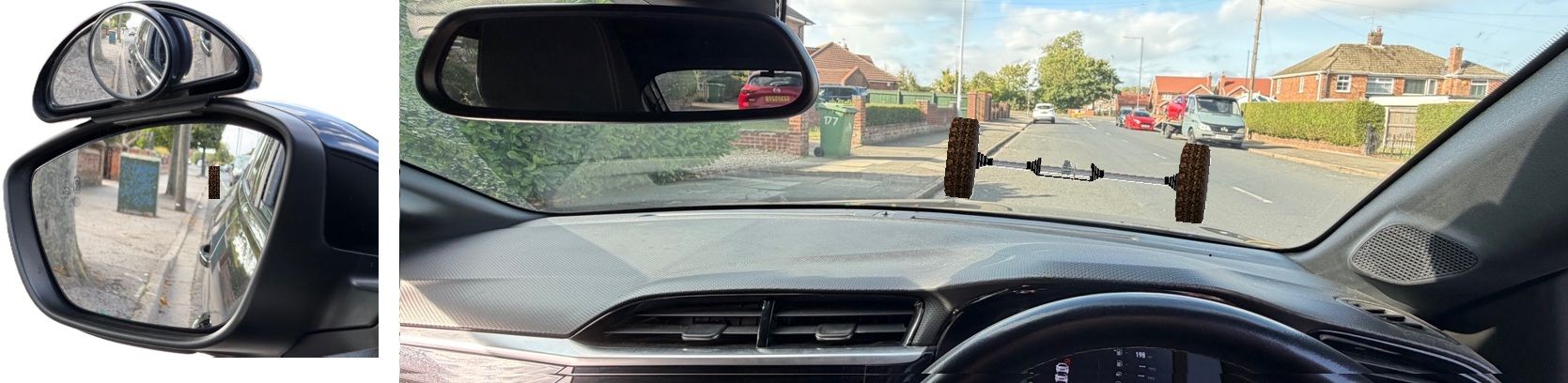
With the three moving pictures above, you can see where the kerb appears at the bottom of the window and in the door mirror. Then you can visualize where the road edge is in the door mirror, helping you determine where the two front wheels will be.